
Artificial intelligence is changing every corner of healthcare. But what does that mean for practising dentists?
While AI in radiograph interpretation has received plenty of attention, there are other, less obvious areas where AI is already being adopted, sometimes in ways that surprise even experienced clinicians.
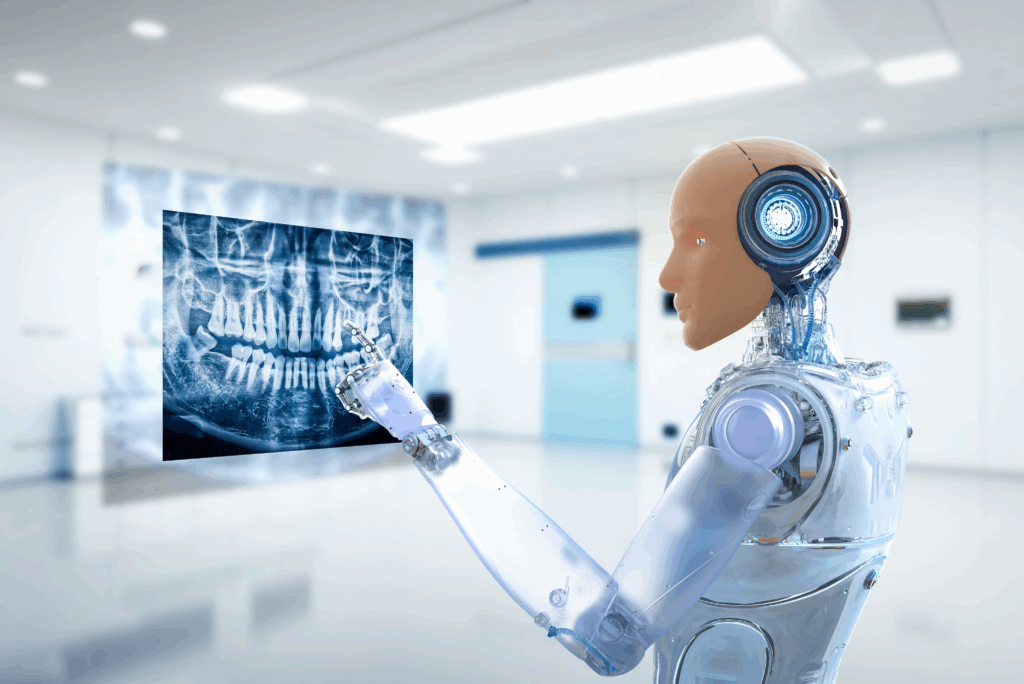
In this month’s blog, we’re highlighting three examples of how dentists are using AI right now. From chairside crown design to remote triage and robotic support, each one reveals a different aspect of how digital tools are quietly reshaping practice. These aren’t future concepts — they’re already in use, and gaining momentum.
1. Instant Tooth Designs Without a Lab
For many dentists, restoration planning still involves a back-and-forth with the lab: scans are sent off, designs are reviewed, and adjustments are requested. It’s a well-established process, but it can introduce delays and sometimes compromise the clinical workflow.
One of the more surprising uses of AI in this space is real-time automated tooth design. Tools like ToothForge use spectral machine learning to analyse intraoral scans and generate high-resolution 3D crown models on the spot. The system tailors the morphology to the patient’s anatomy (and it does so in seconds!).
That means dentists can generate a crown model during the same appointment, reducing reliance on lab communication and enabling faster, more predictable chairside delivery.
It’s not just a matter of convenience: studies show that AI-based design can improve precision and consistency in crown morphology compared to manual digital methods.
2. Remote Triage Using Patient Photos
Teledentistry has expanded rapidly in recent years, but its reach has often been limited to visual assessments and basic patient education. That’s beginning to change.
New AI platforms now allow clinicians to assess patient-submitted photographs for early signs of caries, periodontal inflammation, and mucosal lesions… Even when images are taken with a standard smartphone. The system flags potential issues and triages patients accordingly, helping clinicians prioritise appointments based on need.
This technology is particularly promising for dentists working with rural or remote populations, where regular in-person exams may not be practical. It’s already being tested in community settings and early results suggest that diagnostic performance can approach that of clinical examination.
One systematic review found strong agreement between AI-assisted image interpretation and professional diagnosis across a range of oral conditions.
3. A Robot That Can Prep a Crown
This final example feels closer to science fiction — but it’s real.
In a dental clinic in Colombia, a robotic arm powered by AI software successfully completed a crown preparation on a live patient. The robot worked under the supervision of a dentist, who remained present to oversee the procedure. The result was a preparation completed with over 90% accuracy.
This isn’t a tool you’ll see in every surgery anytime soon, but it represents an early step in integrating robotics with precision-guided software for dental applications.
The potential uses are compelling — particularly for routine or highly repetitive tasks where consistency matters. While clinical responsibility remains firmly in human hands (don’t worry – our jobs are safe!), tools like this could one day assist in procedures that require minute accuracy over long periods of time.
What This Means for Dentists in Practice
While these developments are still emerging, they reflect a clear shift in how dental care is planned and delivered. AI isn’t replacing clinicians, but it is streamlining workflows, supporting clinical decisions, and expanding the reach of treatment into new environments.
What’s particularly striking is how many of these systems are designed to integrate into existing practice models. They don’t require a fundamental change in approach yet still reduce friction, save time, or provide earlier insight.
For dentists enrolled in our diploma programmes, this evolving landscape is an important context. Understanding the tools that are shaping tomorrow’s care — and the evidence behind them — is part of what makes postgraduate study so relevant today.
Get Our Industry Round-Ups in Your Inbox
Each month, we publish bitesize summaries of important business scholarship and thought leadership to help you build your skills as a professional.
Join our mailing list below for our updates delivered to your inbox.
