
Retention remains one of the biggest challenges in orthodontics. Even after successful alignment, maintaining those results is far from simple. Fixed mandibular retainers, bonded canine-to-canine, are a common and effective way to keep teeth in position, yet they come with one persistent drawback: bonding failure.
Bonding failure can lead to unwanted tooth movement, additional chair time, and frustration for both the clinician and the patient. Despite the widespread use of fixed retainers, there is still no clear agreement on the best way to prepare enamel before bonding. This is where a new randomised controlled trial offers useful insight.
Can a simple alteration in enamel preparation before bonding mandibular retainers help reduce bonding failure? The study compared two straightforward approaches, sandblasting and pumicing, to see which produced a more durable bond.
Our Summary
This clinical trial evaluated the debonding rate of mandibular fixed retainers after two different enamel preparations before acid etching: sandblasting versus pumicing.
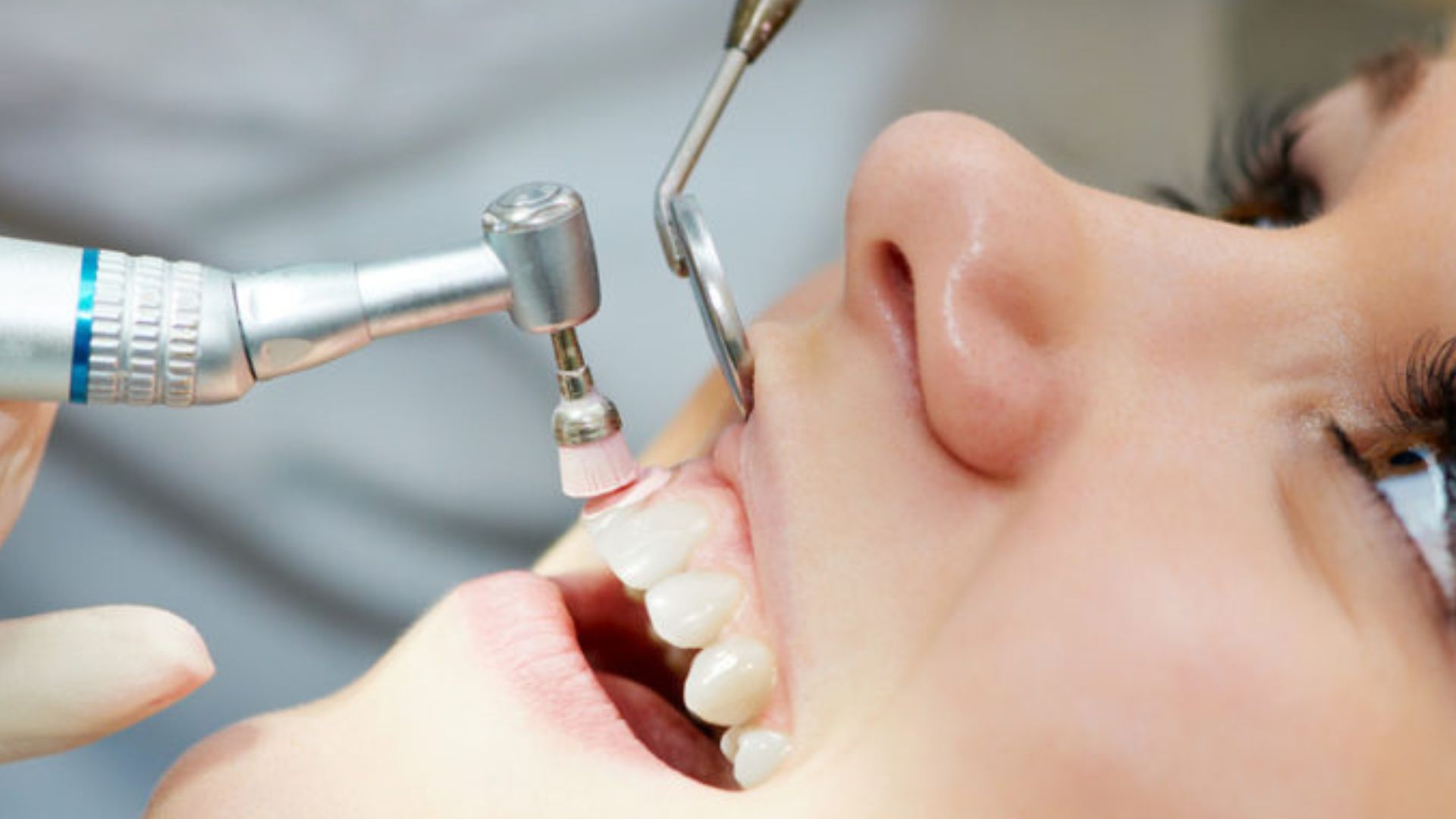
Eighty-eight patients with a mean age of 16.5 years were randomly assigned to one of two groups. The first group received enamel preparation by pumicing, while the second group underwent sandblasting with aluminium oxide particles before retainer placement.
All patients received a mandibular canine-to-canine fixed retainer bonded by the same operator using an identical bonding protocol. The enamel surface was sandblasted for 5 seconds per tooth in the sandblasting group, while the control group received conventional pumicing.
The primary outcome was the first-time bonding failure of the lingual retainer over an 18-month period, with follow-ups every 3 months. Secondary outcomes included the rate of wire fracture and the incidence of unexpected tooth movement.
The Findings
After 18 months, the overall bonding failure rate across all participants was 17.1%. Notably, most failures (93%) occurred within the first nine months — a critical period where retainers are under the most stress as teeth stabilise post-treatment.
The difference between the two enamel preparation techniques was considerable. Failures occurred in 7.9% of the sandblasting group compared with 25% of the pumicing group. This represents nearly a threefold reduction in bond failure when enamel was sandblasted prior to etching.
Interestingly, no retainer wire fractures were observed throughout the 18-month follow-up period, suggesting that the failures were related primarily to bond strength rather than mechanical fatigue of the wire itself. Unexpected dental movements were reported in 7.1% of patients, though there was no statistically significant difference between the two groups.
What it Means For Clinical Practice
This trial concluded that sandblasting enamel instead of pumicing before acid etching significantly reduced the debonding rate of mandibular retainers. The researchers suggested that sandblasting improves micromechanical retention by roughening the enamel surface more effectively, leading to stronger resin bonding.
For orthodontists, this finding may have practical significance. A short, five-second sandblasting step could meaningfully reduce the likelihood of retainer failure — saving time, avoiding re-bonding appointments, and improving long-term stability for patients. While sandblasting equipment requires an initial investment, it offers a simple, repeatable modification to an everyday procedure with measurable benefits.
Limitation
A major limitation of this trial is its single-centre design, which may limit generalisability. In addition, neither the operator nor the patients could be blinded, a common limitation in procedural studies. Nonetheless, the results present a compelling case for incorporating sandblasting into routine bonding protocols.
In summary, for clinicians seeking to improve the longevity of fixed mandibular retainers, sandblasting enamel before bonding offers a clear advantage over traditional pumicing — achieving a threefold reduction in debonding rate within the first 18 months of retention.
About Dr. Jamal

Dr. Jamal Giri is an orthodontist and associate professor at B.P. Koirala Institute of Health Sciences in Nepal. He obtained his orthodontic training from the Institute of Medicine, Tribhuvan University, Nepal, in 2014.
Currently pursuing a PhD at the University of Adelaide, Dr. Jamal’s research focuses on the genetic and environmental factors influencing malocclusion development. He also holds a postgraduate certificate in clinical education from the University of Edinburgh and a master’s in medical education from the University of Nottingham.
Dr. Jamal teaches on the Diploma in Orthodontics and Dentofacial Orthopaedics at the London Dental Institute.
Read More
Kamm Q, Phonchareun E, Esquenet M, Rafflenbeul F, Séverac F, Bolender Y. Comparison of bonding failure rates of mandibular retainers after 2 enamel preparations–sandblasting vs pumicing: An 18-month randomized controlled trial. American Journal of Orthodontics and Dentofacial Orthopedics. 2025;168(3):262–72.
Get Our Research Round-Ups in Your Inbox
Each month, we publish bite-sized summaries of critical research to keep you updated with the latest advancements in dental science.
Subscribe below to stay ahead in your practice and enhance your knowledge with concise and informative summaries, delivered straight to your inbox.
